
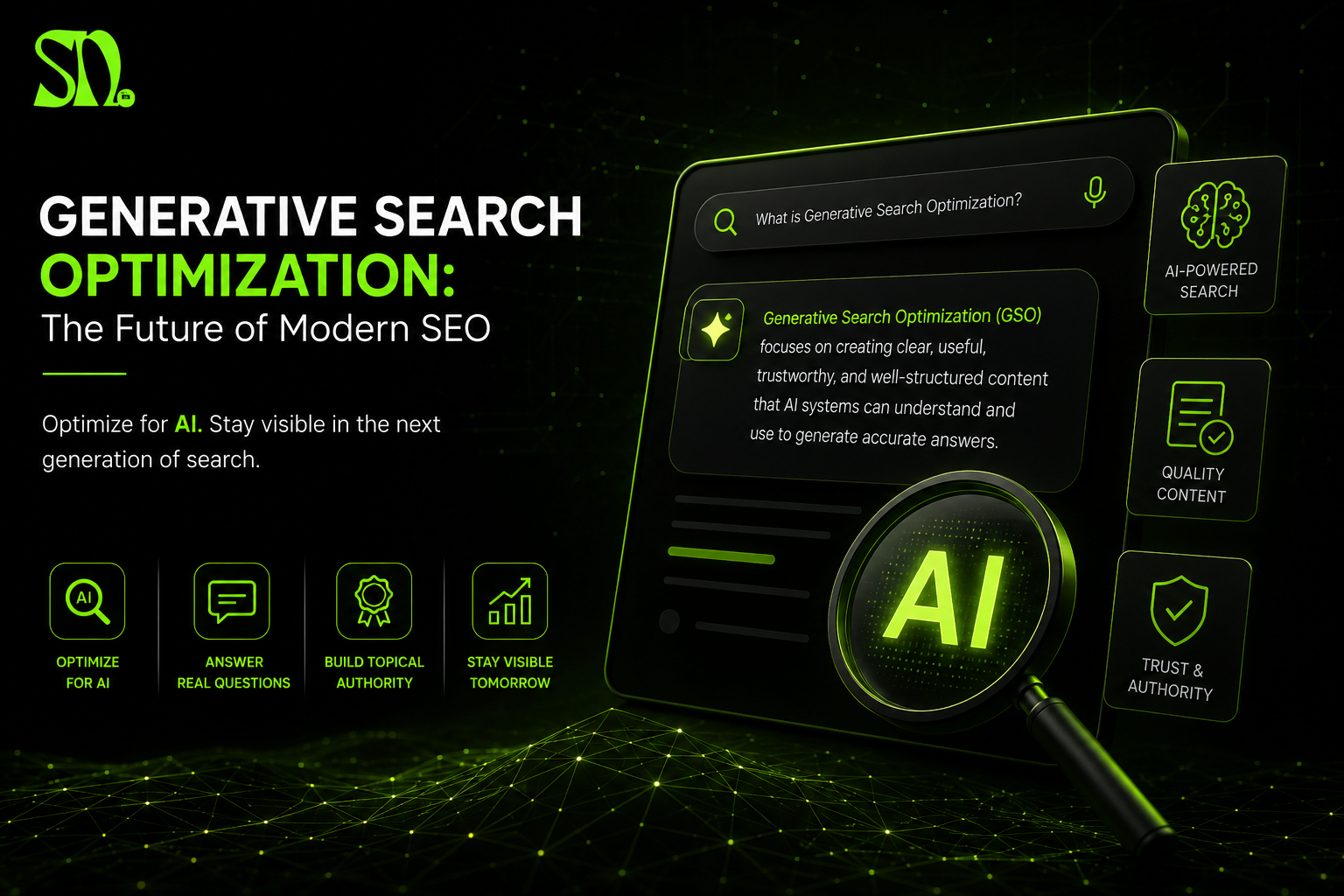
 Generative Search Optimization (GSO) is changing the way businesses approach online visibility. Traditional search engine optimization has focused mainly on helping websites rank higher in search engine results pages. However, the rise of artificial intelligence has introduced a new search experience where users can ask questions and receive detailed, conversational answers directly from AI-powered search systems.
This shift has created a growing need for businesses to optimize their content for generative search. Generative Search Optimization focuses on creating clear, useful, trustworthy, and well-structured content that AI systems can understand and potentially use when generating answers.
For businesses, marketers, and content creators, understanding GSO can provide an opportunity to stay visible as search behavior continues to evolve.
What Is Generative Search Optimization?
Generative Search Optimization is the process of improving online content so that artificial intelligence and generative search systems can easily understand, interpret, and potentially reference it when answering user questions.
Traditional SEO focuses on factors such as keywords, backlinks, technical performance, search intent, and rankings. GSO shares many of these principles but places additional emphasis on the quality, context, structure, and usefulness of information.
For example, instead of creating an article simply to rank for the keyword “digital marketing strategies,” a GSO-focused article would provide clear explanations, practical examples, relevant questions, and trustworthy information around the entire topic.
The goal is not simply to rank a webpage. It is to make the information valuable enough that AI-powered search systems can understand the subject and consider the content when generating responses.
Why Is Generative Search Optimization Important?
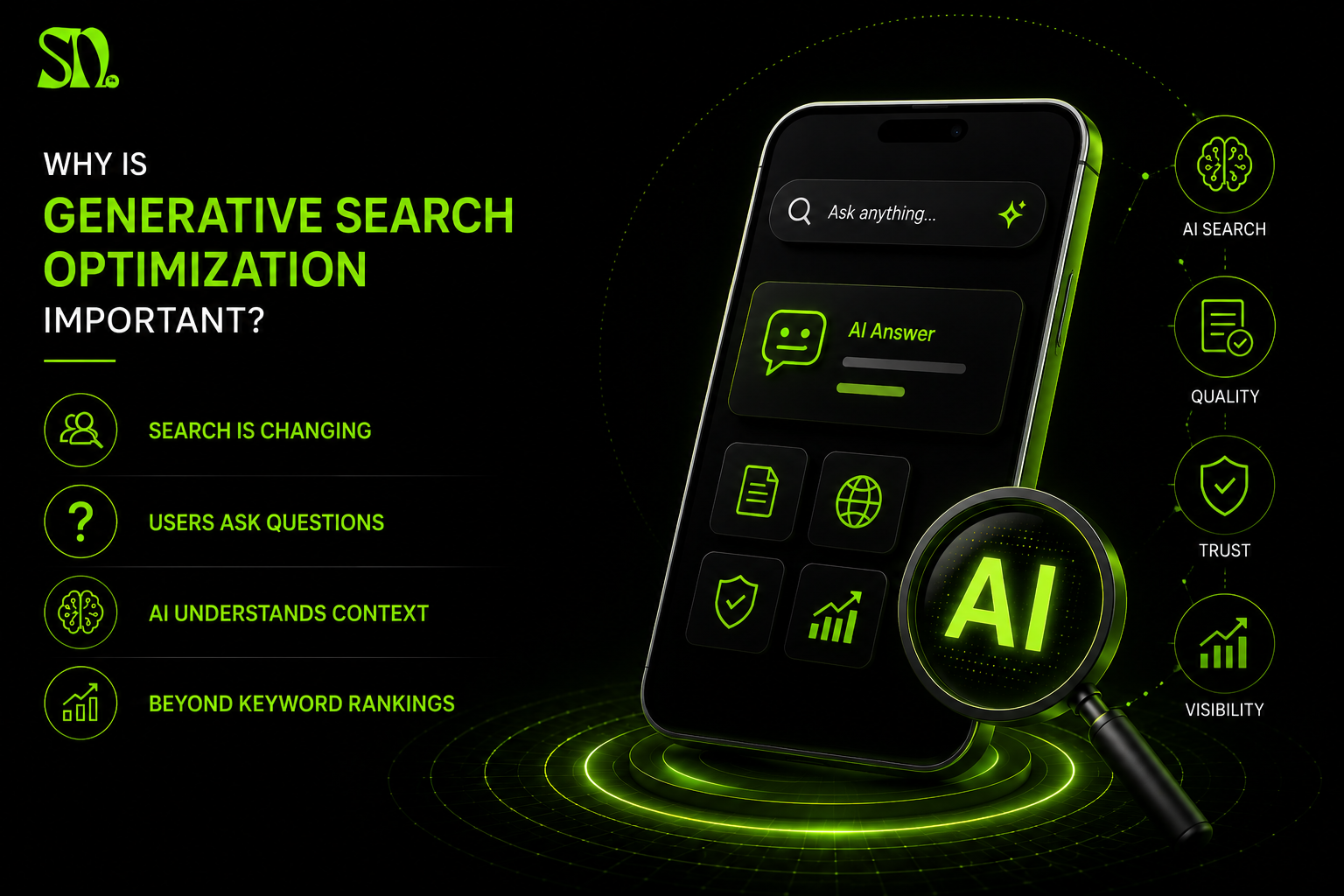 Search behavior is changing as users become more comfortable interacting with AI-powered platforms. Instead of entering short keywords, people can now ask complete questions and expect detailed answers.
A user might search for:
- “What is the best digital marketing strategy for a small business?”
- “How does PPC advertising work?”
- “What are the benefits of mobile commerce?”
- “How can I improve my website visibility?”
Generative search systems can interpret the context behind these questions and provide summarized answers.
This means businesses need to think beyond traditional keyword rankings. Even if users do not immediately click through several search results, they may discover brands through AI-generated recommendations, summaries, and answers.
Generative Search Optimization can therefore help businesses prepare their content for this changing search environment.
How Does Generative Search Optimization Work?
Generative Search Optimization works by making content easier for AI systems to understand and evaluate. AI-powered search systems need to interpret information, identify useful sources, understand relationships between topics, and provide relevant answers.
Well-optimized content should clearly communicate:
- What the topic is
- What questions it answers
- Who the information is intended for
- Why the information is useful
- Where important claims come from
- How different concepts are connected
For example, a business writing about PPC marketing should not only mention the keyword repeatedly. It should explain PPC advertising, discuss its benefits, describe how campaigns work, provide examples, explain common mistakes, and answer related questions.
This creates a deeper and more useful resource that provides context around the primary topic.
Generative Search Optimization vs Traditional SEO
 Traditional SEO and Generative Search Optimization are closely connected, but they have different areas of emphasis.
Traditional SEO generally focuses on improving a website’s visibility in search engine results. Keyword research, backlinks, website speed, mobile optimization, internal linking, and technical SEO are important parts of this process.
Generative Search Optimization focuses more strongly on how information can be understood and used by AI-powered search systems.
Traditional SEO asks:
“How can I improve my search ranking?”
GSO also asks:
“How can I create information that AI systems recognize as useful, relevant, and trustworthy?”
This does not mean traditional SEO is becoming irrelevant. Instead, businesses can combine both approaches. Strong technical SEO can help search engines discover and understand content, while high-quality content and strong topical authority can make that information more useful for generative search.
Key Benefits of Generative Search Optimization
1. Improved Visibility
One of the biggest advantages of GSO is the opportunity to improve brand visibility across emerging AI-powered search experiences. When users ask questions related to a business’s products or services, useful content can increase the possibility of being considered by generative systems.
2. Stronger Brand Authority
High-quality educational content can help establish a business as a knowledgeable source. Consistently publishing accurate and helpful information can strengthen perceived expertise within a particular industry.
3. Better User Experience
GSO encourages businesses to focus on answering user questions instead of simply filling pages with keywords. This can make content easier to read, understand, and navigate.
4. Greater Relevance
Generative search often depends on context. Creating comprehensive content around a topic allows businesses to address different aspects of user intent rather than targeting only one keyword.
5. Future-Ready Search Strategy
Search technology continues to develop. Businesses that begin adapting their content strategy now can be better prepared for changes in how consumers discover information online.
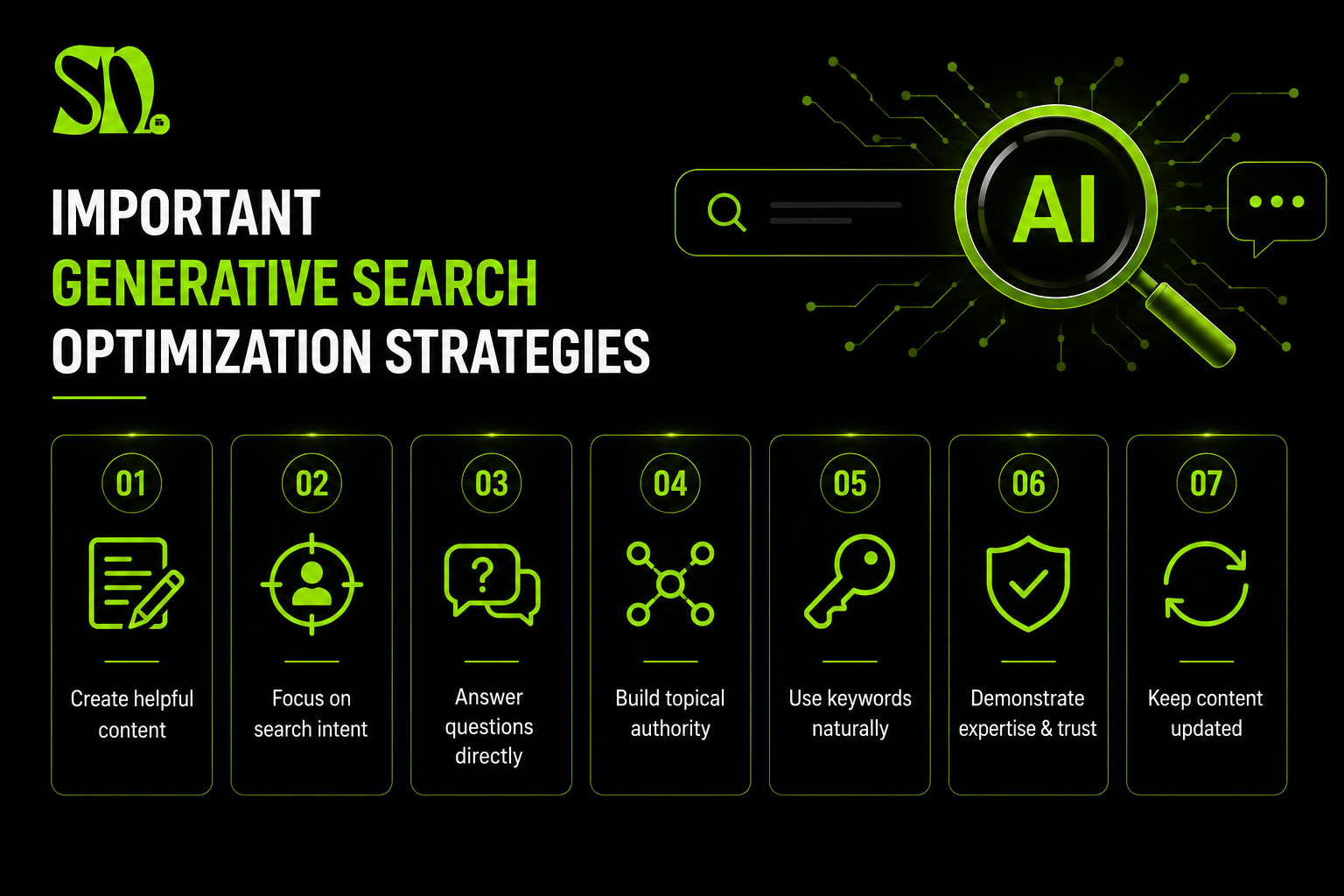
Important Generative Search Optimization Strategies
Create Helpful and Original Content
 Content should provide genuine value to readers. Instead of rewriting information that already exists online, businesses should aim to offer original explanations, examples, insights, data, or practical advice.
Useful content should solve a specific problem or answer a specific question.
For example, an article about social media marketing could explain how to choose platforms, create content, measure results, and avoid common mistakes.
Focus on Search Intent
Understanding search intent is essential for both SEO and GSO. Marketers should consider what users actually want when they search for a particular topic.
A user searching “what is email marketing” probably wants an explanation. Someone searching “best email marketing software” may be comparing solutions.
Creating content that matches these different intentions can make the information more relevant.
Answer Questions Directly
Generative search is highly conversational, so content should provide direct answers to common questions.
Using headings such as:
- What is Generative Search Optimization?
- Why is GSO important?
- How does GSO work?
- What are the benefits of GSO?
can make the content easier to understand and navigate.
Answers should be clear and concise before providing additional details.
Build Topical Authority
A single article may not be enough to establish strong expertise. Businesses can create a group of related articles covering different parts of the same subject.
For example, a digital marketing website could publish content about:
- SEO marketing
- PPC marketing
- Content marketing
- Social media marketing
- Mobile commerce marketing
- Generative Search Optimization
Internal links between related articles can help users and search systems understand the relationship between topics.
Use Keywords Naturally
Keywords are still important, but they should be used naturally. Repeating the same phrase excessively can make content difficult to read and may reduce its quality.
Instead, use the primary keyword along with related terms, questions, synonyms, and supporting concepts.
For a page targeting “Generative Search Optimization,” related topics could include AI search, generative AI, search visibility, AI-generated answers, search intent, content optimization, and traditional SEO.
Demonstrate Expertise and Trust
Trust is becoming increasingly important in online search. Businesses should clearly communicate who created their content and provide reliable information.
Adding author information, credible references, accurate facts, updated information, and relevant business details can strengthen content quality.
When making important claims, supporting them with trustworthy sources can also improve credibility.
Keep Content Updated
Search behavior and AI technology are developing quickly. Information that is accurate today may become outdated later.
Businesses should regularly review important pages and update outdated statistics, examples, product information, strategies, and industry developments.
A content update can also be an opportunity to improve structure, add missing questions, and remove unnecessary information.
The Role of Structured Content
Content structure is another important part of Generative Search Optimization. AI systems need to understand the relationships between different pieces of information.
Clear headings, short paragraphs, bullet points, lists, tables, and descriptive sections can improve readability and make information easier to interpret.
For example, instead of writing one extremely long paragraph about digital advertising, divide it into sections covering types, benefits, costs, strategies, and common mistakes.
This helps both human readers and search technologies understand the content.
Common GSO Mistakes to Avoid
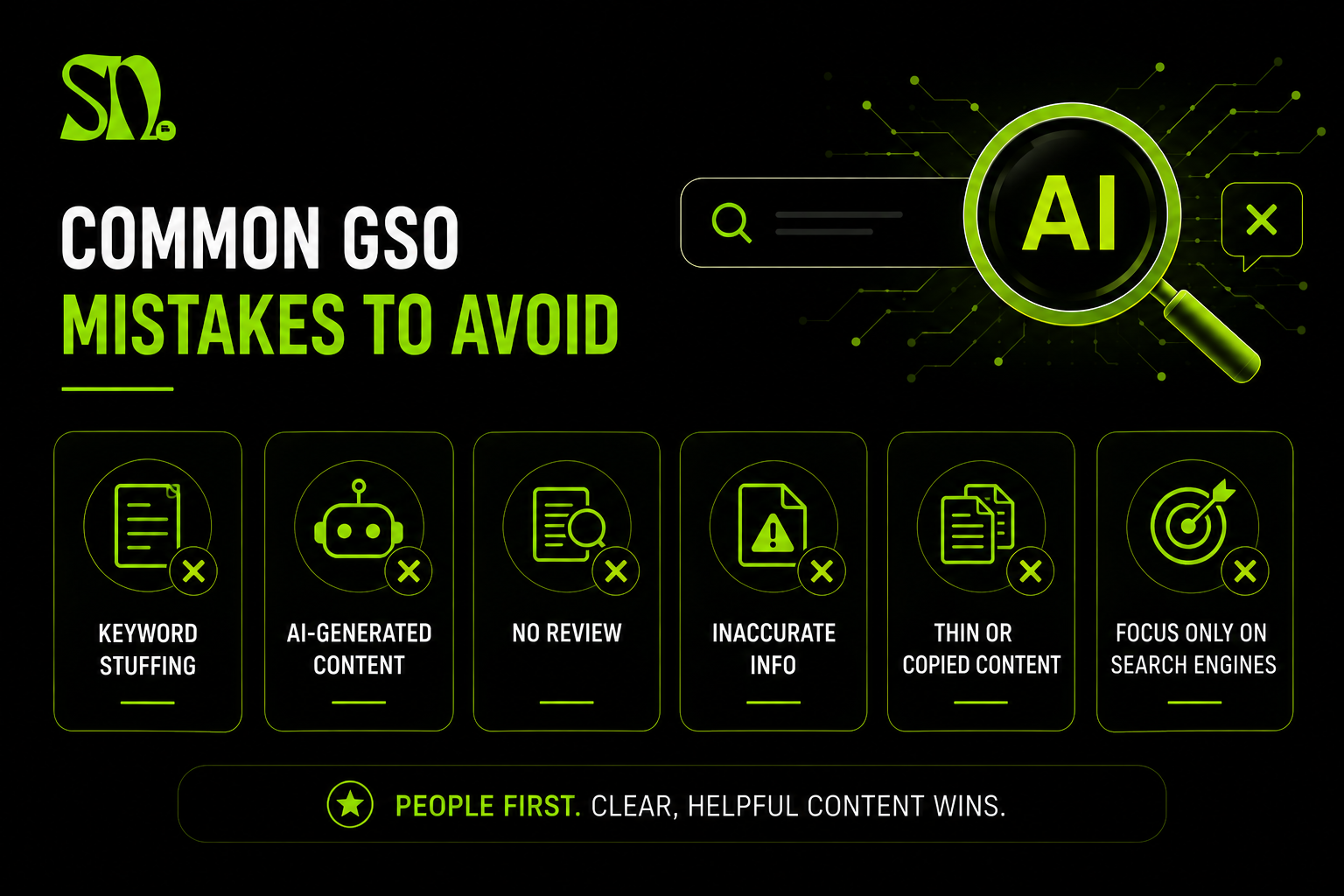 Businesses should avoid treating GSO as simply another keyword technique.
One common mistake is keyword stuffing. Repeating “Generative Search Optimization” unnaturally throughout an article does not automatically make it more useful.
Another mistake is creating generic AI-generated content without adding expertise or original value. Content should be reviewed, edited, fact-checked, and improved by humans.
Businesses should also avoid publishing inaccurate information, copying competitors, creating thin content, or focusing entirely on search engines instead of readers.
The strongest strategy is to create content for people first while making it clear and understandable for search technologies.
How Businesses Can Start With GSO
Businesses do not need to completely replace their existing SEO strategy. Instead, they can gradually add GSO principles to their current content marketing process.
Start by identifying the most important topics, products, services, and questions related to the business.
Next, review existing content and identify opportunities to improve it. Add clearer answers, useful examples, supporting information, relevant internal links, and updated facts.
Businesses can then create new content around related questions and build topic clusters over time.
It is also useful to monitor how the brand appears in different search experiences and continue improving content based on user needs.
The Future of Generative Search Optimization
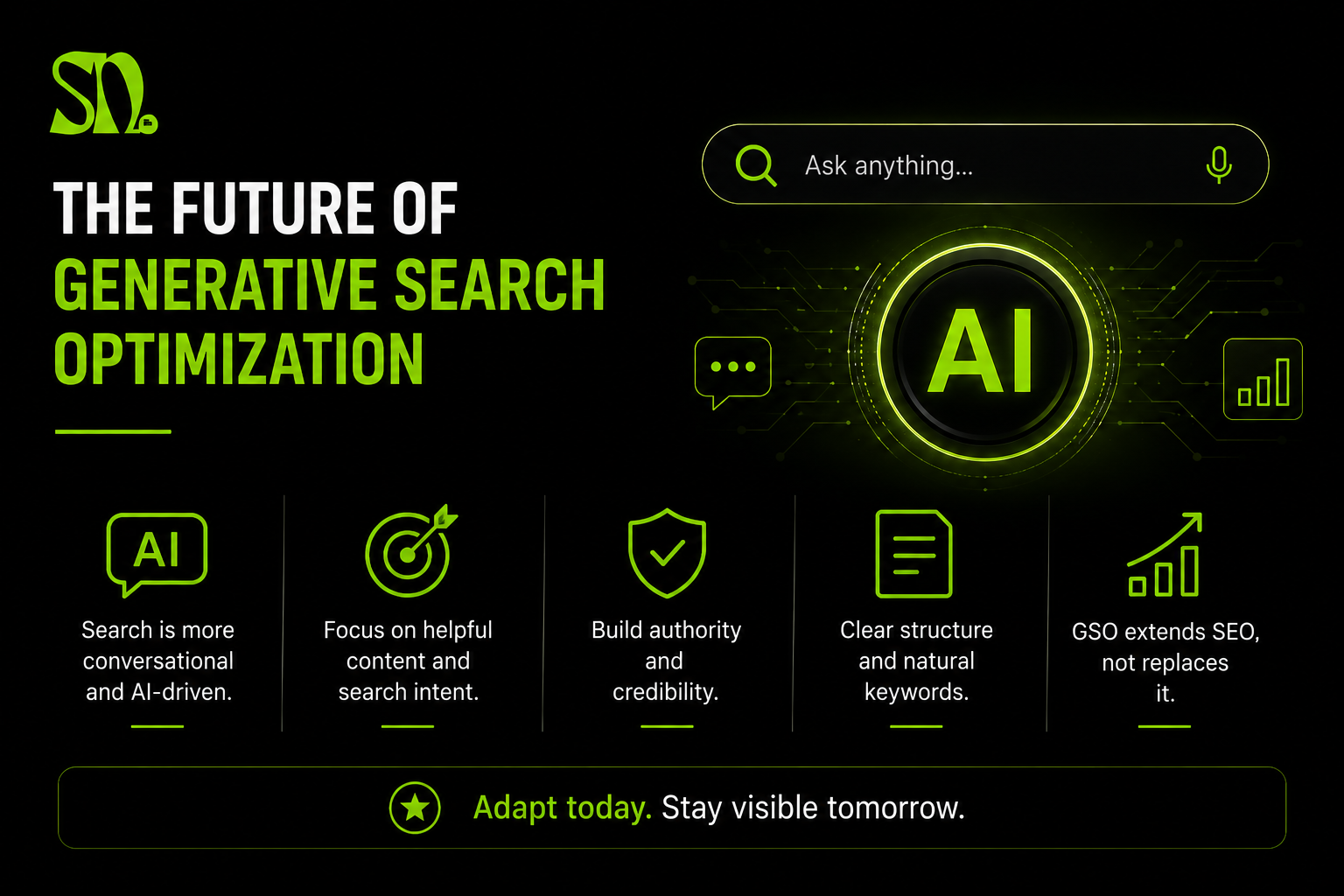 The future of search is becoming increasingly conversational, contextual, and AI-driven. Users are no longer limited to typing short keywords into a search box. They can ask complex questions and expect useful answers immediately.
This development is creating new challenges and opportunities for businesses.
Generative Search Optimization provides a framework for adapting to this changing environment. By focusing on helpful content, search intent, topical authority, credibility, clear structure, and natural keyword usage, businesses can create digital content that remains valuable across different search experiences.
GSO should not be viewed as a replacement for traditional SEO. Instead, it should be considered an extension of a broader search strategy.
Conclusion
Generative Search Optimization is becoming an important consideration for businesses that want to remain visible in the changing world of search. As AI-powered platforms become more influential, simply ranking a webpage may no longer be the only measure of online visibility.
Businesses should focus on producing accurate, useful, original, and well-structured information that answers real customer questions.
By combining traditional SEO with Generative Search Optimization, businesses can strengthen their content strategy, build authority, improve user experiences, and prepare for the future of AI-powered search.
The key is simple: create valuable information for people, make it easy to understand, and build genuine authority around your subject. As search continues to evolve, businesses that adapt their content strategies early can create stronger opportunities for long-term digital visibility.