
Mobile commerce marketing, often called m-commerce marketing, has become an important part of modern digital marketing. With consumers spending more time on smartphones and tablets, businesses have new opportunities to connect with customers, promote products, and increase online sales directly through mobile devices.
What Is Mobile Commerce Marketing?
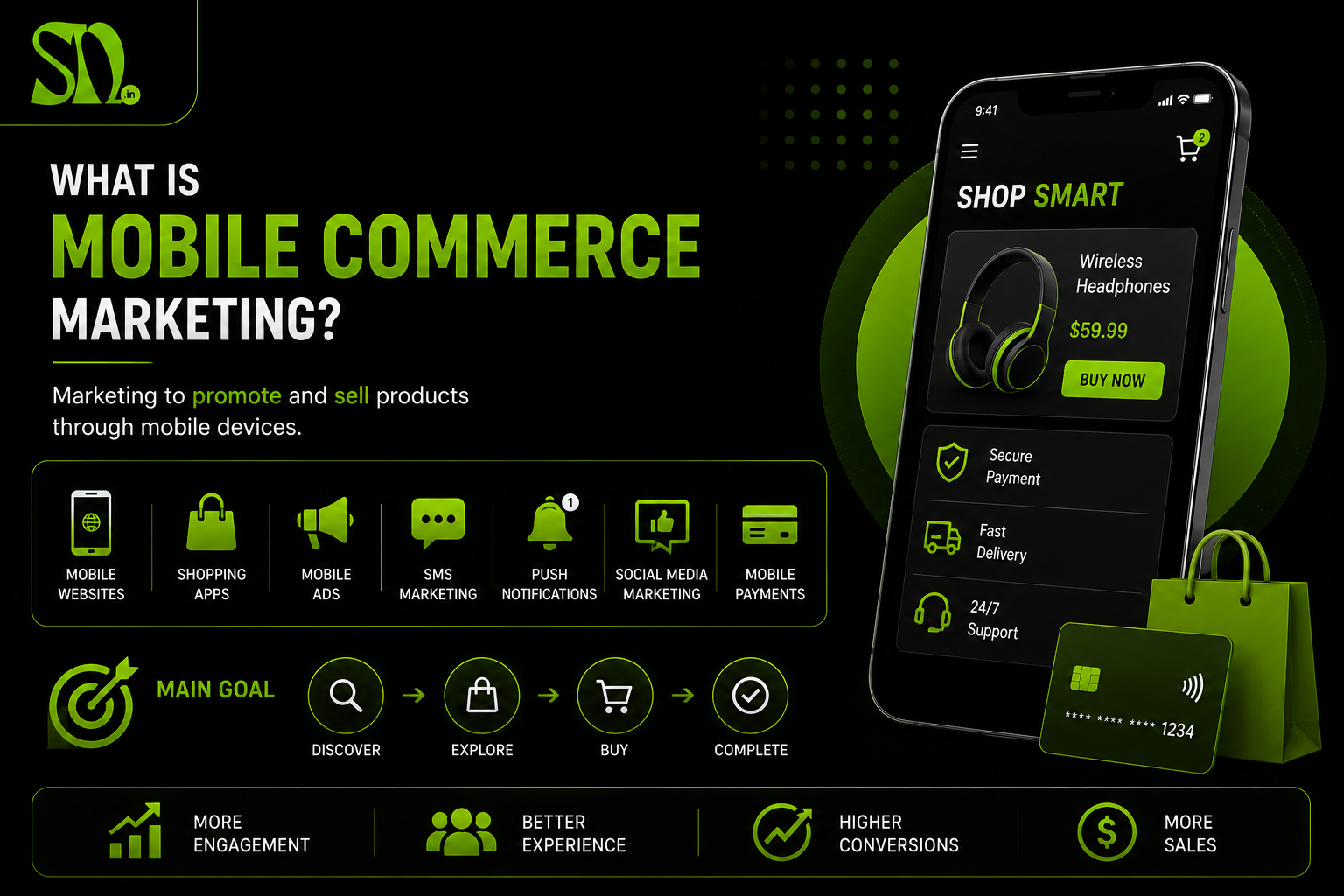
Mobile commerce marketing refers to marketing strategies designed to promote and sell products or services through mobile devices. It includes activities such as mobile-friendly websites, shopping apps, mobile advertising, SMS marketing, push notifications, social media marketing, and mobile payment experiences.
The main goal of mobile commerce marketing is to make the customer journey simple and convenient—from discovering a product to completing a purchase.
Why Is Mobile Commerce Marketing Important?
Smartphones have changed the way people search for information, compare products, and make purchasing decisions. Customers can discover a brand while browsing social media, search for product information on Google, and complete a purchase within minutes.
For businesses, this creates an opportunity to reach customers at different stages of the buying journey.
A strong mobile commerce marketing strategy can help businesses:
- Reach customers wherever they are
- Increase website and app traffic
- Improve customer engagement
- Make purchasing faster and easier
- Increase online sales and conversions
- Build stronger customer relationships
- Provide personalized shopping experiences
Key Mobile Commerce Marketing Strategies
1. Mobile-Friendly Websites
A mobile-friendly website is one of the foundations of successful mobile commerce marketing. The website should load quickly, display properly on different screen sizes, and provide easy navigation.
Important elements include clear product information, simple menus, readable text, fast-loading images, and an easy checkout process.
If customers struggle to use a website on their phones, they may leave before completing a purchase.
2. Mobile Shopping Apps
Mobile apps can provide customers with a more personalized shopping experience. Businesses can use apps to showcase products, offer special promotions, provide loyalty rewards, and send personalized notifications.
An effective shopping app should be simple, fast, and easy to navigate.
3. Mobile Advertising
Mobile advertising allows businesses to reach potential customers while they use smartphones and tablets. Businesses can use search ads, social media advertisements, display ads, and video advertisements to promote products.
Mobile ads can also use audience targeting to reach people based on interests, demographics, online behavior, and previous interactions with a brand.
4. SMS Marketing
SMS marketing is another useful mobile commerce marketing strategy. Businesses can send customers messages about discounts, new products, order updates, and limited-time offers.
However, messages should be relevant and sent at appropriate times. Too many promotional messages can cause customers to unsubscribe.
5. Push Notifications
Push notifications allow mobile apps to communicate directly with users. Businesses can use them to announce special offers, remind customers about abandoned carts, introduce new products, or provide personalized recommendations.
When used carefully, push notifications can encourage customers to return to an app and complete purchases.
6. Social Media Marketing
Social media plays a major role in mobile commerce because many users access platforms such as Instagram, Facebook, TikTok, and other social networks primarily through mobile devices.
Businesses can use social media to showcase products, publish short-form videos, work with influencers, and direct customers toward mobile shopping experiences.
Social commerce features can also reduce the number of steps between product discovery and purchase.
7. Mobile Payment Options
A smooth payment experience is essential for mobile commerce marketing. Customers should be able to complete purchases quickly using convenient payment methods.
Businesses can offer options such as digital wallets, cards, online banking, and other secure mobile payment solutions depending on their target market.
A complicated checkout process can lead to cart abandonment, while a simple payment experience can improve conversions.
Personalization in Mobile Commerce Marketing
Personalization can make mobile shopping experiences more relevant to individual customers. Businesses can analyze customer behavior, previous purchases, browsing activity, and preferences to provide more relevant product recommendations and offers.
For example, an online fashion store might recommend products based on a customer’s previous purchases or browsing history.
Personalized experiences can improve engagement and encourage repeat purchases when they are implemented responsibly and transparently.
Benefits of Mobile Commerce Marketing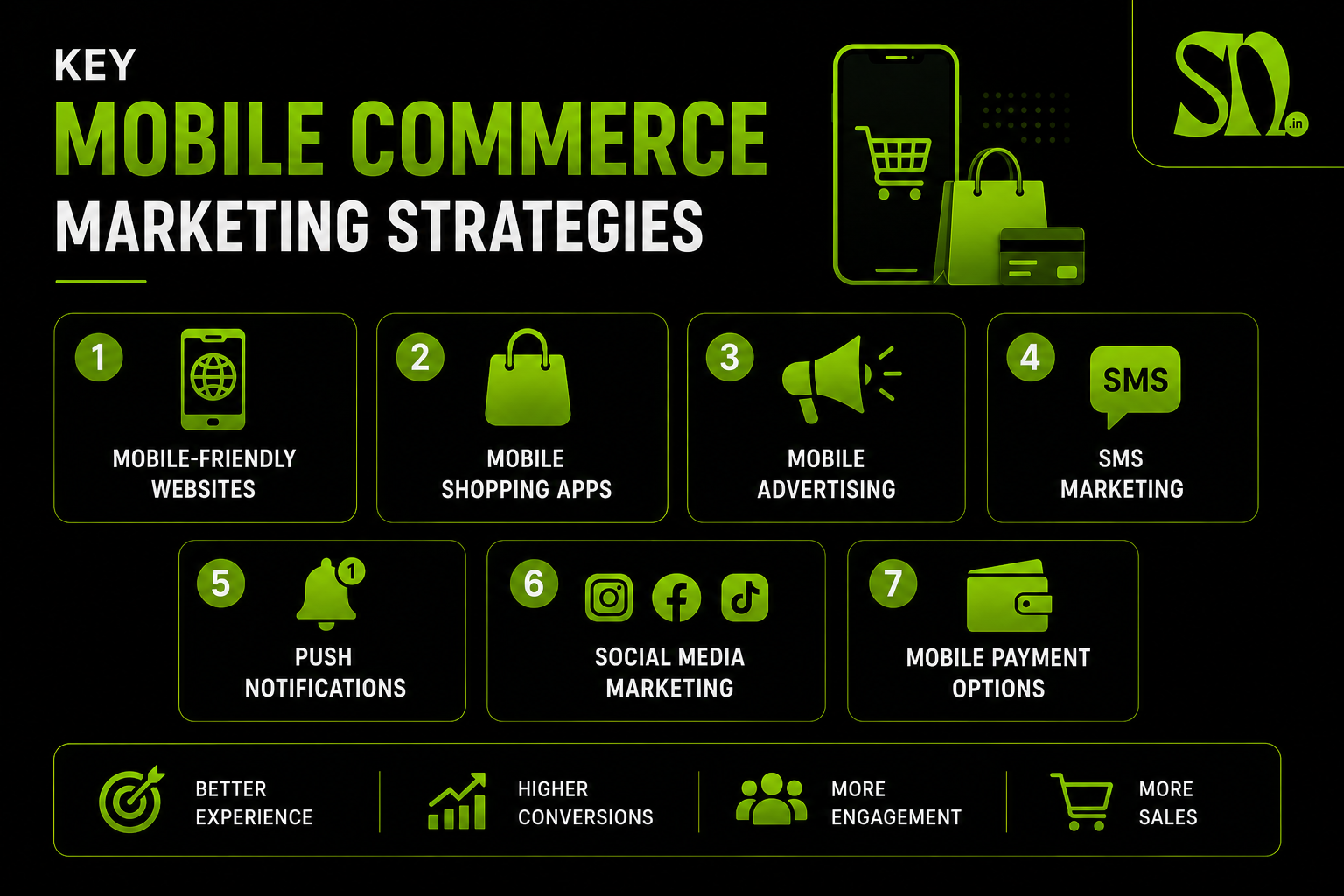
One of the biggest benefits of mobile commerce marketing is convenience. Customers can browse products, compare prices, read reviews, and complete purchases using their smartphones or tablets. This allows businesses to connect with customers throughout the day, regardless of where they are.
Greater Reach
Mobile devices give businesses access to a large and constantly connected audience. Customers use their smartphones for searching, shopping, social media, entertainment, and communication. By using mobile commerce marketing, businesses can reach potential customers across different platforms and locations.
Better Customer Engagement
Mobile commerce creates multiple opportunities for businesses to interact with customers. Push notifications, SMS marketing, social media posts, mobile apps, and personalized offers can keep customers connected with a brand. Regular but relevant communication can help businesses build stronger and longer-lasting customer relationships.
Faster and More Convenient Purchasing
A well-designed mobile shopping experience can make purchasing much faster. Customers can select products, add them to their cart, choose a payment method, and complete the transaction without using a computer. Mobile-friendly checkout pages can reduce unnecessary steps and make it easier for customers to complete their purchases.
Personalized Shopping Experiences
Mobile commerce marketing allows businesses to create personalized experiences based on customer interests and behavior. Businesses can recommend products, display relevant advertisements, and provide customized offers based on previous purchases or browsing activity.
For example, an online store can recommend products related to items a customer has previously viewed. This can make the shopping experience more relevant and useful.
Increased Customer Loyalty
Mobile apps and mobile marketing campaigns can help businesses encourage repeat purchases. Loyalty programs, exclusive discounts, reward points, and personalized offers can motivate customers to return to a brand.
Businesses can also use mobile notifications to remind customers about new products, special promotions, or loyalty rewards.
Valuable Customer Data
Mobile commerce platforms can provide useful information about customer behavior. Businesses can analyze data such as product views, purchases, search activity, abandoned carts, and customer interactions.
This information can help marketers understand what customers want and make better decisions about products, advertising, pricing, and promotions.
Higher Conversion Opportunities
A simple and convenient mobile shopping experience can increase the possibility of turning visitors into customers. When customers can quickly find products and complete purchases without unnecessary steps, they are less likely to abandon the buying process.
Mobile advertisements can also direct users directly to product pages, creating a shorter path from advertisement to purchase.
Cost-Effective Marketing
Mobile commerce marketing can be cost-effective compared with some traditional marketing methods. Businesses can use social media, email, SMS, mobile advertising, and content marketing to reach specific audiences without relying entirely on expensive offline advertising.
Digital campaigns can also be measured and optimized based on performance, helping businesses use their marketing budgets more efficiently.
Real-Time Communication
Mobile devices allow businesses to communicate with customers in real time. Companies can send information about order confirmations, shipping updates, limited-time offers, new product launches, and special events.
This immediate communication can improve the customer experience while keeping the brand connected with its audience.
Improved Customer Experience
A well-planned mobile commerce strategy focuses on making every stage of the customer journey easier. From product discovery and browsing to payment and post-purchase communication, mobile technology can create a smooth shopping experience.
When customers find a website or app easy to use, they are more likely to return and recommend the business to others.
Competitive Advantage
Businesses that provide a strong mobile shopping experience can gain an advantage over competitors with poorly optimized digital platforms. As more consumers use smartphones for shopping, having a fast, convenient, and secure mobile experience can become an important factor in attracting and retaining customers.
Common Mobile Commerce Marketing Mistakes
Despite its benefits, mobile commerce marketing can fail when businesses do not focus on the customer experience.
Common mistakes include:
- Having a slow mobile website
- Using difficult navigation
- Making the checkout process too complicated
- Sending excessive SMS or push notifications
- Creating advertisements that are not optimized for mobile screens
- Ignoring mobile search optimization
- Providing limited payment options
- Failing to test the customer journey on different devices
Avoiding these problems can significantly improve the overall mobile shopping experience.
The Future of Mobile Commerce Marketing
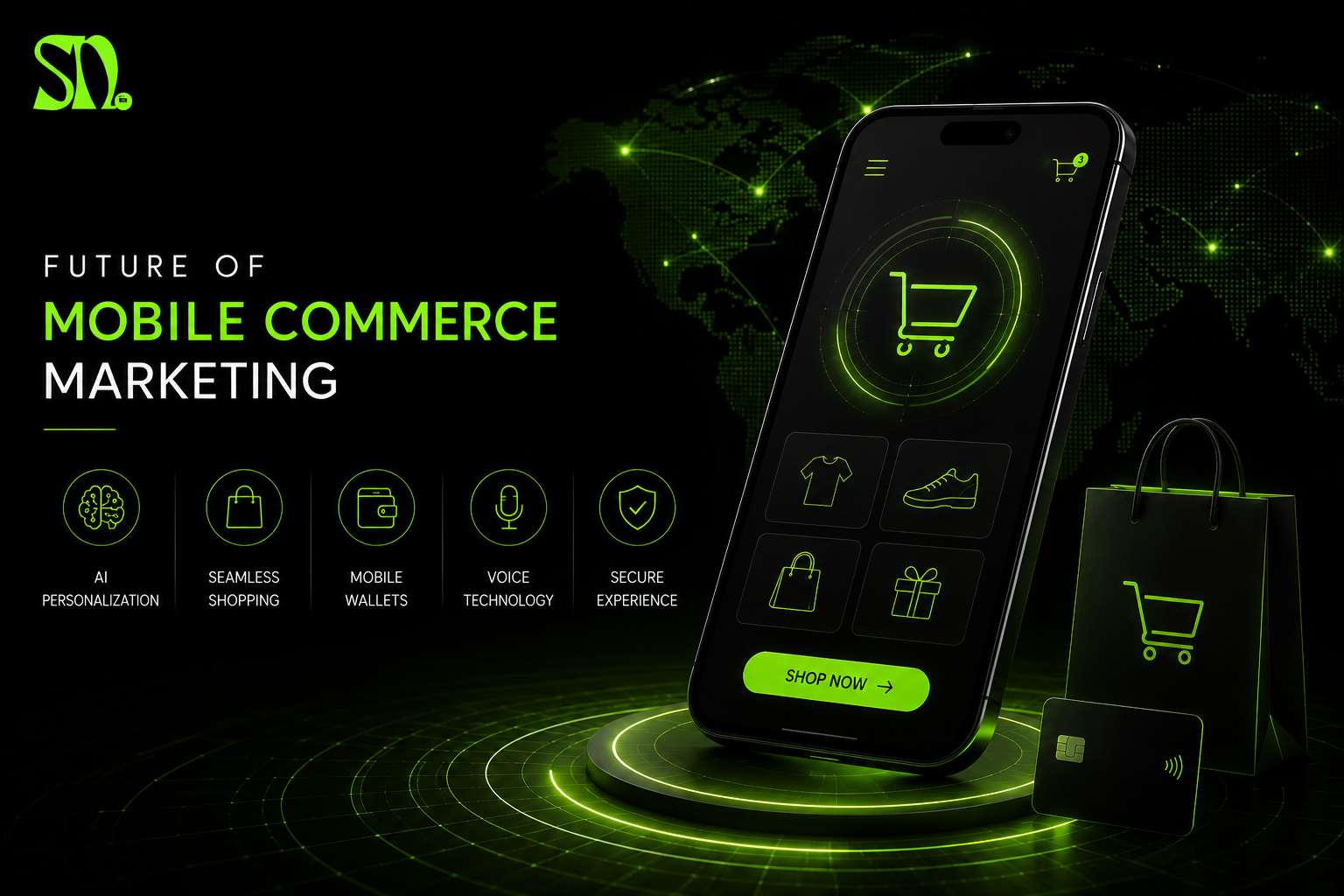 The future of mobile commerce marketing is likely to be shaped by artificial intelligence, personalization, social commerce, mobile wallets, voice technology, and increasingly seamless shopping experiences.
AI can help businesses analyze customer behavior, recommend relevant products, personalize marketing campaigns, and automate parts of the customer journey. Social platforms are also making it easier for consumers to discover products and move directly toward purchasing.
As mobile technology continues to evolve, businesses that prioritize convenience, personalization, security, and customer experience will be better positioned to succeed.
Conclusion
Mobile commerce marketing is an essential strategy for businesses that want to reach today’s mobile-first consumers. From mobile-friendly websites and shopping apps to SMS campaigns, social media advertising, personalized recommendations, and mobile payments, businesses have many ways to connect with customers and increase sales.
A successful strategy is not simply about selling through smartphones. It is about creating a fast, convenient, secure, and personalized shopping experience that makes it easy for customers to discover products and complete their purchases.